Barracuda Fish Design
A Sharp, Confident Silhouette That Cuts Through the Noise
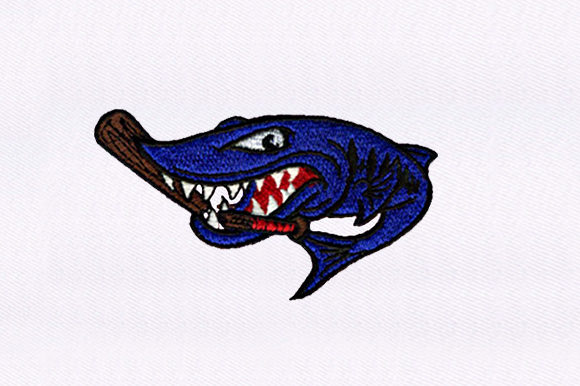
First impression? This Barracuda Fish Design doesn’t whisper — it glides in with purpose. The shape is lean and dynamic, not cartoonish or overly stylized. It carries that unmistakable predatory elegance: a tapered snout, slightly open mouth, strong dorsal line, and a tail fin angled for motion. There’s no clutter — no bubbles, no coral, no text. Just the fish, rendered cleanly in embroidery-friendly lines and balanced fill areas. That simplicity is its biggest strength. It reads instantly at 3 inches on a tote bag, holds presence at 5 inches on a sweatshirt back, and still retains character when scaled down to 2.5 inches for a baby onesie chest placement.
Where It Shines in Real Projects
I tested Barracuda Fish Design on a natural canvas tote for a local ocean-themed boutique launch — no lining, medium-weight cotton canvas, medium tear-away stabilizer. Stitch-out was clean and confident. The satin stitch along the dorsal ridge held crisp definition, and the fill stitch body avoided puffing or shadowing. Customers responded immediately: “That’s *my* fish,” said one marine biologist; another called it “the coolest thing I’ve seen on a bag all season.” That kind of visceral recognition matters — especially for Etsy sellers or small shop owners building a curated, story-driven brand.
It works equally well as a subtle embroidered patch on a denim jacket (heat-seal or sew-on), a bold front-chest piece on a heavyweight unisex sweatshirt, or even as part of a trio of coastal motifs on kitchen towels. As holiday embroidery? Think navy tea towels with white thread — elegant, understated, and memorable. For nursery decor? Pair it with soft blues and grays on a cotton pillow cover — no sharp edges, no aggressive color blocking, just quiet confidence.
Where to Proceed With Intention
This isn’t a design to toss onto every surface without thought. On thin or highly stretchy fabric — like lightweight jersey tees or baby rib knits — you’ll need cut-away stabilizer and possibly reduced stitch density (check your machine’s settings or editing software). The eye detail and gill lines are small but legible; they’ll vanish on dense, napped fabrics like fleece unless you adjust underlay or increase density slightly.
Curved surfaces demand attention too. On a structured cap front, the tail tip and snout may distort if hooped too tightly or stitched without proper foam or adhesive stabilizer underneath. And while it’s not an applique design, avoid pairing it with heavy topstitching or dense decorative accents directly adjacent — the Barracuda Fish Design earns its space by being visually self-contained.
Dark fabric? Excellent contrast potential — but test thread colors carefully. A high-sheen polyester thread in silver or teal pops beautifully on black twill, while matte cotton can mute the effect. Always run a black-and-white mockup first to assess value balance before committing to final thread choices.
How It Elevates Your Handmade Product — Beyond Looks
There’s a quiet professionalism in this Barracuda Fish Design. It doesn’t scream “craft project” — it reads like intentional design. That builds customer trust, especially for personalized gifts or custom apparel where buyers pay a premium for perceived quality and curation. When used consistently across products — say, on a matching set of apron, towel, and tote — it becomes a recognizable signature, reinforcing brand consistency without needing a logo.
For digital product sellers, it’s versatile licensing-wise: it functions as a standalone embroidery file, integrates cleanly into larger themed collections (ocean life, tropical motifs, aquatic education kits), and translates well into printable mockups for Etsy listings. Its clean lines also scale smoothly for digital previews — no pixelation, no lost detail.
Practical Designer Notes Before You Stitch
- Always test first — run Barracuda Fish Design on scrap fabric matching your final substrate and stabilizer combo.
- Check thread color contrast — especially on dark or textured backgrounds. What looks sharp on screen may read muddy in stitch.
- Review stitch density — not all file formats render density identically. If your machine flags high-density warnings, verify whether it’s necessary or adjustable.
- Confirm hoop size — the design likely fits standard 4x4 or 5x7 hoops, but double-check your chosen format’s dimensions before loading.
- Inspect small details — zoom in on the eye and gill area in your embroidery software. Are those running stitches tight enough? Is the satin stitch width consistent?
- Use proper stabilizer — medium tear-away for stable wovens, cut-away for knits, and adhesive + foam for caps.
- Verify licensing — since Barracuda Fish Design is offered as a commercial embroidery file, confirm whether your intended use (e.g., selling finished embroidered patches or digital bundles) aligns with the seller’s terms.
Final Thought: Not Just Another Fish
In a sea of generic marine embroidery files, Barracuda Fish Design stands out because it respects the craft and the customer. It’s detailed without being fussy, bold without being loud, and versatile without sacrificing identity. Whether you’re stitching a single personalized gift or scaling production for a boutique line, it brings quiet authority to every finished product. That’s the mark of a design that doesn’t just get stitched — it gets remembered.