Vintage Eyeglasses: A Thoughtful Stitch Test
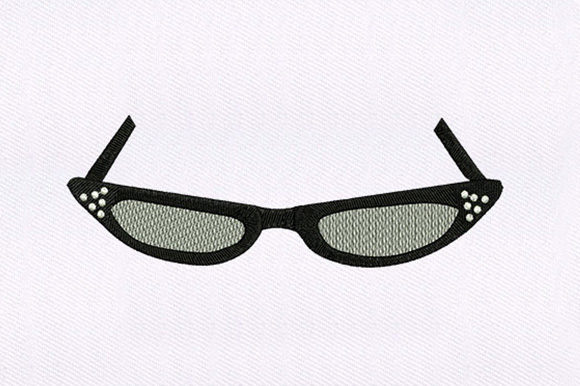
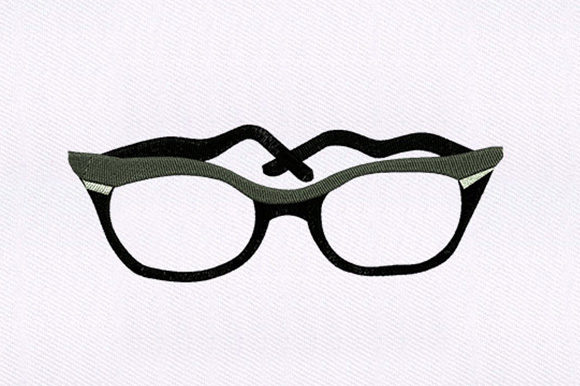
As a designer who’s stitched hundreds of embroidery files for client apparel, boutique merchandise, and Etsy shop launches, I opened Vintage Eyeglasses expecting charm—and got something more useful: clarity. This isn’t just a cute icon. It’s a tightly composed, 4×4 hoop–friendly machine embroidery design that lands with quiet confidence on fabric. At 3.80 inches wide and just 1.39 inches tall, it’s narrow enough to sit neatly on a pocket, sleeve cuff, or baby onesie chest—but detailed enough to read as intentional, not incidental.
First Impressions: Nostalgia Without Clutter
The shape is instantly legible—rounded wire frames with subtle temple curves and delicate bridge detail. No cartoonish exaggeration, no overwrought filigree. Just clean satin stitch outlines and light fill stitch lenses that suggest depth without heaviness. With only 2804 stitches, Vintage Eyeglasses avoids the density traps many “vintage” designs fall into: no dense underlay muddying fine lines, no overlapping satin columns that snag on textured fabric. It breathes. That matters—especially when you’re stitching on cotton-linen tea towels or lightweight chambray for a small shop’s spring collection.
Where It Shines (and Where It Asks for Attention)
I tested Vintage Eyeglasses on three real projects: a canvas tote bag for a local optometrist’s gift bundle, a soft organic-cotton baby bodysuit, and a navy sweatshirt for a handmade accessories line. On the tote? Perfect. The design held crispness across the weave, and the narrow height kept it from competing with the bag’s structure. On the bodysuit? Equally strong—no puckering, even with a lightweight cutaway stabilizer. But on the sweatshirt? I paused. Not because it failed, but because the texture demanded intention: I switched to a medium tear-away + light cutaway combo and slowed my machine speed by 15%. The result? Crisp frames, no thread breaks, and zero distortion in the lens area.
This design works beautifully for:
- Custom apparel—especially sweatshirts, t-shirts, and aprons where minimalism reads as premium
- Embroidered patch production (stitch it on twill, then heat-seal or sew-on)
- Tote bag design and kitchen towel branding for indie shops or wellness brands
- Baby embroidery and nursery decor—its gentle scale feels tender, not cutesy
- Holiday embroidery like vintage-themed Christmas stockings or reading-themed teacher gifts
But use care on:
- Stretchy fabric—always test with ballpoint needle and stabilizer that matches stretch level
- Dark fabric—the lens fill is subtle; consider switching to a slightly higher-contrast thread (e.g., charcoal gray instead of black) for readability
- Curved surfaces like caps—this design wasn’t built for 3D contouring, so avoid front-panel cap placement unless you’re willing to split and reposition
- Frequent-wash items—while stitch count is moderate, always lock threads and trim tails cleanly; reinforce backside knots if using on baby items
What It Adds to Your Finished Product
Vintage Eyeglasses doesn’t shout. It invites. That subtlety elevates handmade product perception—it signals thoughtfulness, not just decoration. When customers see this on a personalized gift or boutique item, they don’t think “embroidery”—they think “curated.” That builds trust. For Etsy sellers, it’s a quiet differentiator: your listing stands out not because the design is flashiest, but because it looks *designed*, not downloaded. And for craft business owners building brand consistency, its clean proportions and balanced negative space make it easy to pair with minimalist typography or soft-color palettes—no visual competition.
Designer Notes You’ll Actually Use
Before stitching Vintage Eyeglasses on your next project, do these five things:
- Test on scrap fabric—same fiber content, same weight, same stabilizer combo you plan to use
- Check thread color contrast in natural light—not just on screen—especially for the lens fill
- Review stitch density visually in your embroidery software: confirm no tiny isolated stitches that might vanish on textured cloth
- Confirm hoop size compatibility: it’s built for 4×4, so avoid forcing it into smaller hoops without digitizing adjustments
- Inspect small details at 200% zoom: temple ends, bridge curve, and lens edge definition all hold up well—but verify before scaling down
Also: run a black-and-white mockup alongside your intended background fabric. This design relies on shape and proportion more than bold contrast, so seeing how it reads in grayscale helps predict real-world visibility. And if you’re selling finished items commercially—or offering Vintage Eyeglasses as part of a digital embroidery file bundle—double-check licensing terms. The file formats listed (PES, DST, JEF, VIP, and nine others) cover most major machines, but commercial use rights aren’t implied by format availability alone.
A Design That Fits Its Category—Without Trying Too Hard
It’s rare to find a Beauty-category embroidery file that avoids cliché—no lipstick smudges, no floral crowns, no exaggerated lashes. Vintage Eyeglasses sidesteps trend-chasing entirely. It speaks to curiosity, intellect, quiet confidence—the kind of vibe that fits a bookstore café apron, a librarian’s holiday mug wrap, or a custom “book lover” pillow cover sold at a craft fair. It’s not flashy. It’s functional elegance, stitched tight and true.
If you’re choosing between dozens of digital embroidery files for your next batch of handmade products, let Vintage Eyeglasses earn its place—not because it’s the biggest or boldest, but because it’s the one that will still look considered, cohesive, and quietly compelling six months from now.