Mini Sail Boat Design: A Practical Review for Real Projects
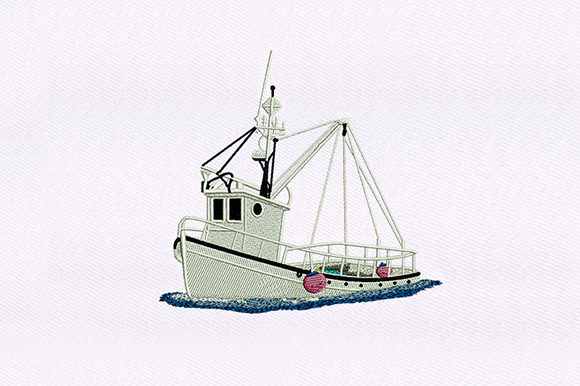
As a designer who’s stitched hundreds of embroidery files for client apparel, boutique merchandise, and Etsy bestsellers, I opened Mini Sail Boat Design expecting charm—and got something more useful: quiet confidence. It’s not flashy, but it’s resolved. Clean lines, balanced negative space, and a shape that reads instantly—even at 2.5 inches wide—make this more than a beach-themed doodle. It feels like a design that’s been edited down to its essential self: a single sail, a compact hull, just enough curve to suggest motion without clutter.
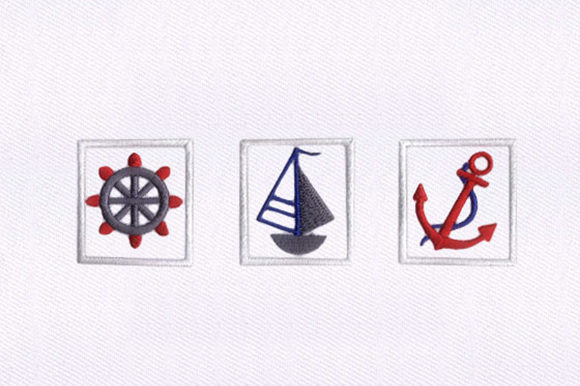
I tested it on a natural linen tea towel first—the kind small shops love for kitchen gifts. The result? Crisp, uncluttered, and unmistakably nautical without leaning into kitsch. No overworked details, no tiny masts that vanish in fill stitch, no fragile flags that snag during trimming. That simplicity is its biggest strength—and the reason it landed on a custom baby onesie for a seaside-themed nursery order last week. On soft Pima cotton, the satin-stitched sail held its shape, the hull stayed smooth, and the whole thing looked handmade—not machine-made. Customers notice that difference. They feel it in the weight of the stitch, the evenness of the edge, the way light catches the slight sheen of good thread.
Where This Design Earns Its Keep
Mini Sail Boat Design thrives where subtlety matters: on minimalist tote bags for coastal boutiques, on the chest of lightweight sweatshirts for summer pop-ups, or as a single embroidered patch sewn onto denim aprons for artisanal coffee shops. It works beautifully as a standalone motif—no framing, no borders needed—because its proportions are inherently stable. I’ve used it as a focal point on pillow covers (medium-weight cotton duck), as a repeat accent along the hem of a child’s beach towel, and even scaled slightly up for a set of monogrammed napkins. In every case, it read clearly, stitched cleanly, and elevated the item without shouting.
For Etsy sellers and craft fair vendors, this is low-risk, high-return design equity. It pairs effortlessly with neutral palettes—think oatmeal canvas, heather grey terry, or ivory chambray—so you can stock fewer thread variations and still offer cohesive collections. And because it’s rooted in the Beach category without being overly seasonal, it sells year-round: as a baby gift (“Welcome to the Shore”), a wedding favor (“Sail Into Marriage”), or a personalized holiday ornament (“Our First Summer Home”).
Where to Pause—and Why
This isn’t a one-size-fits-all embroidery file. Its clean silhouette depends on precision. On highly textured fabrics—like bouclé knits or thick terry—details soften. I’d avoid it on ultra-thin rayon challis unless paired with tear-away + cutaway stabilizer; the hull line can waver without support. On dark fabric, test your thread contrast carefully: a pale blue sail against navy reads beautifully, but a light yellow may disappear unless you use a matte thread with strong definition.
Caps and curved surfaces demand extra attention. Because the design has gentle curves and a compact footprint, it *can* work on front panels—but only if your hoop size allows full stabilization across the dome. I recommend checking the actual hoop requirements before committing to a cap run. Also, skip using it as part of a dense multi-element layout (e.g., clustered with seashells and anchors) unless you verify stitch density isn’t pushing the limits of your machine’s tolerance. Overcrowding dulls its quiet impact.
What It Adds to Your Finished Product
Real talk: Mini Sail Boat Design doesn’t just decorate—it reassures. When customers see it on a handmade product, they register intentionality. It signals care in curation, not just convenience. That builds trust, especially for new buyers browsing your Etsy shop or local market stall. It also supports brand consistency: whether you’re embroidering a linen pouch or a cotton twill cap, the same sail reads as part of your visual language—not a random clipart import.
And yes, it affects perceived value. A well-executed Mini Sail Boat Design on a premium tea towel makes the item feel like a considered gift—not a generic souvenir. That translates directly to pricing power and repeat orders. I’ve watched customers add matching embroidered coasters to their cart after seeing the boat motif on a tote. Recognition matters. Consistency compounds.
Designer Notes You’ll Actually Use
- Always test on scrap fabric first—especially if stitching on stretchy knits or blends. Watch how the hull anchors during satin stitch runs.
- Check thread color contrast in both daylight and indoor lighting. What pops on screen may mute on fabric.
- Review stitch density visually—not just numerically. Dense fill areas should look solid, not muddy.
- Confirm hoop size compatibility before loading into your machine. Some formats may require re-hooping depending on your setup.
- Inspect small corners and sail tips in your embroidery software. Look for stray jump stitches or under-trimmed travel paths.
- Test in black-and-white mockups to assess clarity without color distraction.
- Use appropriate stabilizer: medium-weight cutaway for knits, tear-away for stable wovens, and a light film for delicate linens.
- Verify licensing terms before selling finished items commercially—or reselling the embroidery file itself. This is a machine embroidery design, not a royalty-free graphic.
In short: Mini Sail Boat Design earns its place in your active design library—not as filler, but as a reliable, mood-lifting anchor. It’s the kind of embroidery file you reach for when you want calm precision over loud novelty. Whether you're prepping a batch of personalized gifts, building a cohesive line of custom apparel, or sourcing design assets for your craft business, this one delivers quietly, consistently, and with real project-ready integrity.