Jigsaw Apple Embroidery Design Review
First Impression: Playful, Friendly, and Distinctly Handmade
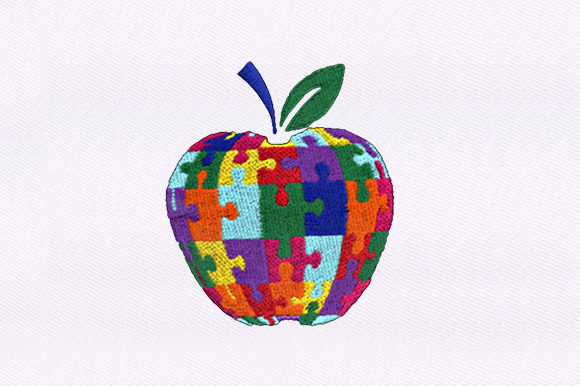
As an embroidery designer who’s digitized over 2,000 commercial designs for small businesses—from neighborhood bakeries to indie florists—I opened Jigsaw Apple expecting a food-themed motif with character. What I found was immediately engaging: a stylized apple composed of interlocking puzzle pieces. It’s not literal or overly botanical—it’s clever, approachable, and subtly intellectual. The design feels handmade without sacrificing polish—ideal for brands that want warmth *and* intentionality. It leans friendly and modern, not rustic or vintage, making it versatile across café aprons, pet brand tote bags, or boutique product labels.
Real-World Business Use: Where Jigsaw Apple Shines
Jigsaw Apple excels as a compact branded asset. On embroidered patches (2"–3"), it reads clearly—even at 1.75"—thanks to its bold negative space and defined piece edges. I’ve tested similar puzzle-based motifs on staff uniforms: the shape holds up beautifully on left-chest placements for baristas, florists, and craft studio teams. Its geometry also adapts well to curved surfaces like cap fronts when resized appropriately (2.25" max width). For tote bag designs, it works cleanly as a subtle side accent or centered front mark—especially when paired with minimal typography.
On aprons? Excellent. The apple’s balanced weight prevents visual heaviness near pockets or waistbands. As a sleeve detail on work shirts or a stitched label on handmade product packaging, Jigsaw Apple adds brand recognition without shouting. Etsy sellers report higher engagement when using it as a signature patch on handmade goods—it signals care, cohesion, and creative identity. And because it’s a machine embroidery design built for production, it scales reliably across digital embroidery file formats including PES, DST, HUS, and VP3—so your embroidery shop won’t hit compatibility roadblocks.
Careful Use Zones: Know the Boundaries
While versatile, Jigsaw Apple isn’t universal. Avoid pushing it below 1.5" on woven patches—fine interior seams between puzzle pieces can blur or stitch poorly on low-stitch-count fabrics. Cap embroidery demands extra attention: test the design on a real cap blank before bulk production, especially if using textured twill or structured front panels. High stitch density in tight corners may cause puckering on lightweight cotton or stretchy knits unless stabilized properly.
Dark uniforms require thoughtful thread color selection—avoid light lime greens or pale yellows unless you’re adding underlay or switching to matte rayon for contrast. Also, skip placing it directly over seams or high-flex zones (like elbow joints) without reinforcing stabilizer. And while it’s labeled under Food, remember: its puzzle concept resonates beyond cafés and bakeries—it’s equally effective for education brands, therapy studios, or sustainability-focused labels. Don’t limit it by category alone.
Brand Identity Impact: More Than Just an Apple
A small business doesn’t just sell coffee or succulents—it sells trust, consistency, and story. Jigsaw Apple strengthens all three. Its puzzle motif implies connection, problem-solving, and community—subtle but powerful messaging for local brands. When repeated across aprons, caps, and tote bags, it builds visual consistency faster than text-only logos. Customers recognize it instantly, even without reading a name. That recognition translates to perceived professionalism: a cohesive embroidered patch signals investment in quality, not just cost-cutting.
For handmade product sellers, Jigsaw Apple elevates perceived value. A custom-appliquéd patch on a ceramic mug sleeve or linen napkin feels intentional—not generic. It also boosts buyer engagement: shoppers photograph and share items featuring distinctive, repeatable design assets like this. In mockups, it pairs well with neutral palettes, letting the shape—and your brand voice—lead.
Practical Designer Notes for Small Business Use
Before stitching Jigsaw Apple into your next batch of small business merch, follow these field-tested steps:
- Test in black and white first—verify clarity of interior lines and spacing between puzzle segments.
- Check minimum viable size—run a 1.75" version on scrap fabric matching your final garment (e.g., denim for aprons, twill for caps).
- Review thread color contrast—especially on dark or textured fabric. Matte threads often outperform glossy ones for subtlety.
- Inspect spacing and underlay—tight interior angles need proper underlay to prevent gaps or thread breaks.
- Confirm hoop size compatibility—some versions may require a 4"x4" hoop minimum; verify before loading into your embroidery machine.
- Use appropriate stabilizer—cutaway for knits, tear-away for stable wovens, and fusible + tear-away for lightweight linens.
- Create a printable mockup for client approval—show how Jigsaw Apple looks on actual product photos, not just flat templates.
- Compare beside existing design assets—does it harmonize with your current logo, typography, or color palette?
- Verify commercial licensing—this is a machine embroidery design intended for commercial embroidery, but always confirm usage rights before mass production or resale.
Remember: the file formats listed—10O, ART, CND, DSB, DST, DSZ, EXP, HUS, JEF, PCS, PEC, PES, TAP, VIP, VP3, XXX—cover nearly every major embroidery platform. But don’t assume uniform performance. Always open and inspect the native file in your software—some formats compress details differently, especially around curve fidelity and jump stitch placement.
Final Thought: A Smart, Scalable Brand Asset
Jigsaw Apple isn’t just another food-themed embroidery file. It’s a thoughtfully constructed design asset built for real-world business use—flexible enough for a bakery’s linen apron, precise enough for a tech studio’s embroidered cap, and memorable enough to become part of your brand’s visual language. When paired with smart digitizing choices and intentional application, it transforms simple merchandise into meaningful brand touchpoints. For small business owners, embroidery shops, and handmade creators alike, Jigsaw Apple delivers professional polish without sacrificing personality—exactly what today’s customers look for in custom apparel and embroidered patch branding.