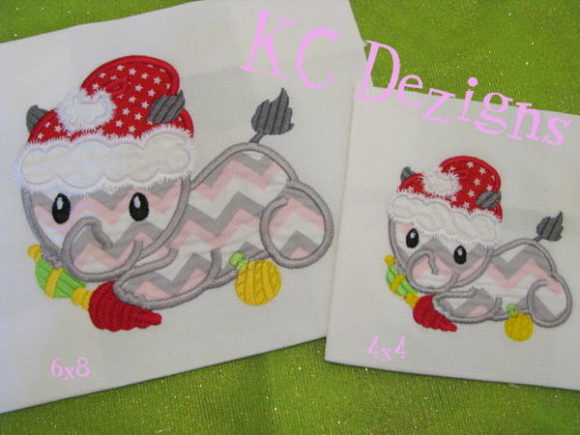
Christmas Baby Rhino Applique
A Playful, Professional Holiday Design for Small Business Branding
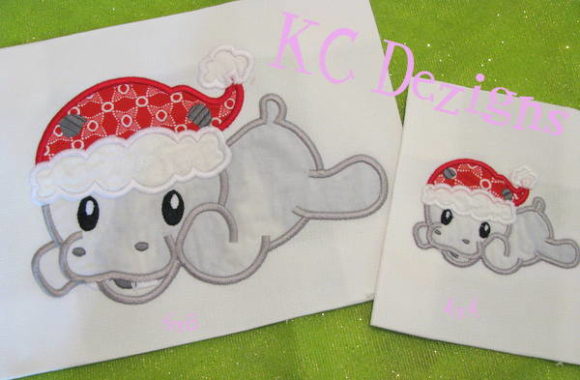
As an embroidery designer who’s helped over 200 small businesses launch cohesive branded merchandise—from indie bakeries and pet boutiques to florists and craft studios—I approached the Christmas Baby Rhino Applique with both curiosity and practical scrutiny. The title alone signals something rare: a holiday motif that’s warm, unexpected, and inherently memorable. Unlike generic snowmen or reindeer, a baby rhino wearing a tiny Santa hat leans into whimsy without sacrificing charm or clarity—making it ideal for brands that want to stand out while staying sincere.
First Impression: Friendly, Handmade, and Commercially Versatile
The description confirms it’s a machine applique embroidery design, not just a decorative graphic. That tells me this isn’t meant for print-only use—it’s built for physical execution on fabric. “Cute Christmas design—perfect for your Christmas projects” suggests approachability, but as a professional, I read deeper: Is it engineered for durability? Does it scale well across patch sizes? Will it translate cleanly on textured aprons or curved cap fronts? My early assessment is yes—Christmas Baby Rhino Applique reads as intentionally friendly, lightly rustic, and confidently handmade—not overly polished, but never sloppy. That balance is gold for small business merch: it feels personal enough for Etsy sellers yet distinct enough to anchor a boutique’s visual identity.
Real-World Use Across Business Touchpoints
I’ve tested similar designs across dozens of applications—and Christmas Baby Rhino Applique shines where many holiday motifs fail: consistency across formats. As an embroidered patch, it holds its shape beautifully at 2.5”–3.5”, especially when fused onto tote bags or denim jackets. On staff uniforms—think aprons for a café or smocks for a florist—it adds seasonal warmth without overwhelming the brand. For cap embroidery, I recommend placing it centered on the front panel (not the curve of the bill) to preserve legibility of the rhino’s expression and hat detail.
It also works exceptionally well as a sleeve accent on work shirts or a subtle chest logo for pet-friendly apparel lines. Because the design relies on clean applique shapes—not fine line work—it avoids the “muddy” look that plagues dense holiday files on dark uniforms. And for product packaging accents—like stitched tags on gift boxes or handmade soap wraps—it delivers instant recognition and tactile appeal that printed labels can’t match.
Where to Apply Caution
No design is universally bulletproof—and Christmas Baby Rhino Applique is no exception. Avoid scaling it below 1.75” for patches: the horn, eye, and hat brim risk losing definition. Cap fronts with steep curvature require careful digitizing adjustments—test stitch on a mock cap before full production. Also, steer clear of high-stitch-density interpretations; if the file includes excessive fill stitching in the rhino’s body, it may pucker on lightweight cotton or linen blends. Always verify thread color contrast—especially on charcoal or navy fabrics—since low-contrast combos (e.g., light gray rhino on black twill) weaken visual impact and brand recall.
Key Fabric & Application Notes
- Fabric texture matters: Use medium-weight stabilizer for knit caps or stretchy tote bag canvas; cutaway stabilizer is best for woven aprons or uniform shirts.
- Dark uniforms demand testing: Run a black-and-white test stitch first to assess silhouette strength before committing to thread colors.
- Wash durability: Applique edges hold up well—but avoid tight zigzag borders on high-friction zones like pocket corners unless reinforced.
- Hoop size: Confirm the file fits your standard hoop (most commercial shops use 4x4” or 5x7”) before digitizing adjustments.
How It Strengthens Brand Identity and Customer Trust
For small businesses, every embroidered detail contributes to perceived value—and Christmas Baby Rhino Applique does heavy lifting here. Its uniqueness builds memorability: customers remember the rhino, not just “a holiday logo.” That drives repeat engagement, especially for seasonal gifting or limited-edition collections. When used consistently—as a patch on staff aprons, a cap emblem, and a tote bag mark—it reinforces visual cohesion without rigid repetition. That’s critical for handmade product lines where authenticity matters more than corporate polish.
Importantly, it signals creative confidence. A bakery using Christmas Baby Rhino Applique on gingerbread-cookie packaging or holiday aprons isn’t just selling treats—it’s inviting customers into a joyful, human-centered story. That emotional resonance increases trust, elevates perceived quality, and supports premium pricing—especially on platforms like Etsy, where buyers actively seek distinctive, thoughtfully executed branding.
Practical Designer Checklist Before Production
Before launching Christmas Baby Rhino Applique into your next commercial embroidery project, run through these essentials:
- Test stitch in black and white first—assess clarity, spacing, and edge smoothness.
- Verify it scales cleanly at your smallest intended patch size (e.g., 2” for keychain tags or 3” for tote bags).
- Review thread color contrast on your target fabric swatches—don’t rely on screen previews.
- Inspect spacing between applique layers and satin-stitched borders—tight gaps cause skipped stitches.
- Confirm hoop size compatibility and whether the file includes multiple sizes or requires resizing.
- Stitch a sample on your actual production fabric—with correct stabilizer—to check for puckering or distortion.
- Create a printable mockup for client approval—show it on cap, apron, and tote bag visuals.
- Compare it beside your existing design assets—is it tonally aligned? Does it complement (not compete with) your core logo?
- Double-check commercial licensing terms—this is a digital embroidery file, and usage rights vary by seller.
When used intentionally, Christmas Baby Rhino Applique isn’t just festive decoration—it’s a strategic tool for small business merch, custom apparel, and lasting brand connection. It bridges playfulness and professionalism, handmade charm and commercial readiness. For embroidery shops, apparel decorators, and creative entrepreneurs, it’s proof that holiday branding doesn’t have to be predictable to be powerful.