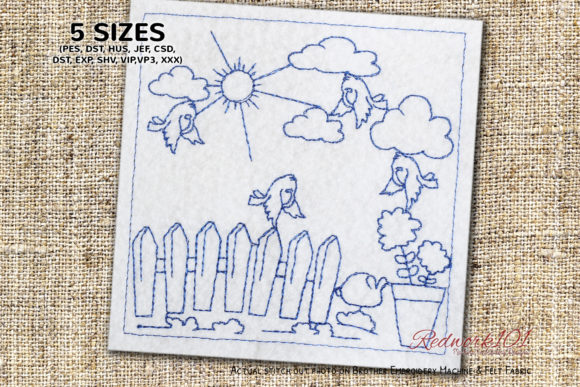
Bird Playing in the Garden Redwork
First Impressions: A Nature-Inspired Seasonal Gem
Bird Playing in the Garden Redwork immediately evokes a sense of calm and natural beauty. The design features a bird in a garden setting, rendered with delicate stitch work that captures the essence of nature. It feels nostalgic yet fresh, perfect for those who appreciate both traditional and modern embroidery styles. The emotional tone is cozy and inviting, making it ideal for holiday and seasonal collections.
Seasonal Appeal and Emotional Connection
This design has strong seasonal appeal, especially during spring and summer months when nature themes resonate most. However, its versatility allows it to be adapted for holiday use as well, particularly for Easter, Mother’s Day, or even as a subtle touch for Christmas decor. The emotional connection it creates is warm and comforting, which aligns well with the sentiments of gift-giving and family gatherings.
As a handmade gift, Bird Playing in the Garden Redwork can elevate the value of your product by adding a personal and artistic touch. Whether stitched onto a sweatshirt, kitchen towel, or pillow cover, it brings a sense of care and intentionality that resonates with customers looking for meaningful items.
Practical Use in Holiday Product Creation
Bird Playing in the Garden Redwork is well-suited for a variety of holiday products. It works beautifully on toile tote bags, embroidered patches, and personalized gifts. Its intricate details make it a great addition to gift bundles or limited edition apparel, offering a unique selling point for Etsy sellers and small shop owners.
For seasonal embroidery, this design can be featured in printable mockups and social media previews, helping to build anticipation before the holiday season. It also lends itself well to home decor such as table linens and aprons, where the subtle elegance of the design shines through.
Considerations for Embroidery Execution
While Bird Playing in the Garden Redwork is visually stunning, there are some practical considerations to keep in mind. The design includes small details and layered elements that may require careful stitching. This means using the right hoop size and ensuring proper stabilizer placement to avoid distortion or puckering.
The thread colors used in the design should be tested on both light and dark fabrics to ensure visibility and consistency. Dark fabric can sometimes obscure the fine details, so it's important to review how the design appears on different textures and materials.
Where to Use Carefully
Bird Playing in the Garden Redwork is best suited for items that won't undergo frequent washing or stretching. While it can be applied to apparel, it may not perform well on stretchy garments or curved caps due to potential distortion. Similarly, thick towels can cause the design to lose definition over time, so it's advisable to test the design on similar materials before mass production.
Items that require repeated washing, such as kitchen towels or table linens, should be considered carefully. The design's intricate nature may not hold up well under constant use, so it's best to use it on more durable or less frequently used products.
Enhancing Brand Consistency and Engagement
When incorporating Bird Playing in the Garden Redwork into your seasonal collection, consider how it fits with your brand identity. If you're focusing on romantic or nostalgic aesthetics, this design will complement your offerings seamlessly. For commercial embroidery or digital embroidery file sales, maintaining a consistent visual style across all products is key to building customer trust and recognition.
Engagement during the holiday season can be boosted by creating realistic mockups and showcasing the design in various contexts. This helps potential buyers visualize how the design would look on their own products, increasing the likelihood of purchase.
Design Notes for Embroidery Sellers
As an experienced embroidery designer, I recommend testing the design on different fabric textures and thread colors before finalizing production. Check stitch density to ensure clarity and durability. Confirm hoop size and stabilizer type based on the specific product you're planning to use it on.
Finally, always verify commercial licensing terms if you're planning to sell finished products. Ensuring that you have the right to use the design commercially is essential for protecting your business and maintaining customer trust.